

Over many years, and in particular in recent years, computer-guided implantology has become established in international everyday clinical practice. To achieve great outcomes, different factors, including first-rate tough and tender tissue, availability, and prosthetic stipulations, ought to be carefully evaluated earlier than surgical procedures.
Prosthetically driven backward planning, wherein the desired restorations guide the surgical phase, has modified the approach to contemporary implant dentistry. In addition, due to technological advancements, powerful equipment for the best virtual implant planning and accurate implant installation is available. Resources, which include intraoral scanners (IOS) and cone-beam computed tomography (CBCT) devices, allow the creation of digital 3-dimensional (3D) affected person models using virtual datasets in Standard Tessellation Language (STL) and Digital Imaging and Communications in Medicine (DICOM) codecs. These datasets are aligned with the prosthetic setup, which uses dedicated implant-making plans software in a method named registration.
A correct registration of the extraordinary datasets is important to avoid the malposition of implants (Flugge et al. 2017). Today, users are supported through artificial intelligence (AI) during registration to automate and accelerate the system (Ntovas et al. 2024). However, extra manual superimposition continues to be required with picture artifact sources, which include notably opaque metals. After perfect implant making plans, surgical courses are designed, and sooner or later, synthetic, commonly by way of milling or 3D printing (Revilla-Leon et al. 2020). In guided approaches, the drilling protocol described by the manufacturer is carried out to prepare the surgical site and install the implant.
Current studies suggest that static computer-assisted implant surgical procedure (sCAIS) is more predictable and correct than freehand implant placement because the surgical template guides the drilling and implant setup series to the in-reality planned function (Schneider et al. 2021). Accuracy is paramount to avoid unfavorable essential anatomical systems, along with adjacent roots, nerves, vessels, and sinuses, and to enhance implant number one balance.
Moreover, digital implant-making plans may additionally reduce or even remove the need for hard-tissue augmentation approaches in selected cases by choosing shorter or inclined implants.
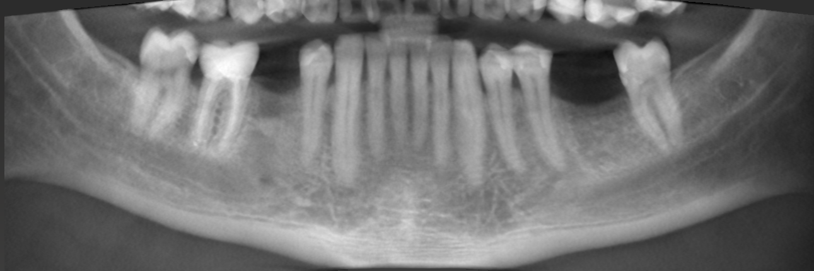
The digital planning software program allows for the most efficient visualization of the medical case by way of creating a 3D virtual patient. This allows conversation among clinicians, dental labs, and patients. Moreover, by connecting implant planning systems with computer-aided layout/production (CAD/CAM) software programs or structures for digital wax-up/set-up design, the ability for communication within the team can be further multiplied. This results in an extra powerful and faster ordinary work.
With sCAIS, the time needed to carry out surgeries may be reduced in comparison to conventional strategies. These consequences include improved efficiency for clinicians and shorter surgical operations for patients, an advantage, especially for aged sufferers or those taking unique medicines, including anticoagulants.
The flap layout may be much less prolonged than with traditional strategies when applying SCAIS. Furthermore, it allows for flapless implant surgical treatment strategies if desired. Avoiding large incisions results in less trauma for smooth tissues and, consequently, faster and much less painful wound recovery.
Due to its high stage of accuracy and the accompanying expanded predictability, guided implant installation can reduce the threat of the wrong positioning of the implant. Dental implants planned in a prosthetic-oriented backward way and established using surgical guides have a tendency to have extended scientific outcomes and show fewer headaches. Thereby, it needs to be cited that the long-term diagnosis of dental implants is associated not only with osseointegration but with a mess of further elements.
One of the principal obstacles to guided surgical operation is the higher prices. The system is predicated on a high-priced technological system, requiring implant-making plans software, intraoral scanners, milling machines, and/or 3-D printers. As a result, it can boost the costs, making sCAIS unaffordable for a few sufferers and restricting its application via dentists operating in resource-constrained contexts.
Clinicians need to undergo particular schooling to perform guided implant surgery. This creates a recognizable learning curve that may be laborious, at the same time as a lack of know-how can lead to disasters, resulting in frustration. Continuous schooling and staying updated with modern-day technologies are fine methods to enhance performance.
The need for superior generation can also pose risks. Problems with hardware equipment or making plans with a software program can lead to photo distortion and complicate the method. Furthermore, the accuracy of surgical publications relies on first-class DICOM pics, intraoral scanning, and software program accuracy.
Although guided surgical treatment is accurate and in step with the prevailing literature, human and technical mistakes may arise. An incorrect intraoral model of surgical courses or screw-ups at some point of production can compromise the accuracy of the final implant role. Additionally, making plan errors, which include incorrect interpretation of DICOM snapshots, can produce unsatisfactory consequences.
Other barriers especially relate to the patient’s anatomy. Complex clinical situations regarding poor, difficult, and tender tissues, in terms of excellence and/or amount, might not be solved clearly through making use of sCAIS. Backward planning is vital to achieve scientific excellence.
Static computer-assisted implant surgical procedures in dentistry are constantly evolving, enabling extra accuracy and efficiency while imparting predictable consequences. However, it’s far more critical to emphasize the need for stability and the advantages and challenges of this method to achieve an excellent outcome for each affected person.
Successful adoption of guided surgical procedures calls for investment in education and training and includes spending more time within the virtual planning segment than with conventional strategies. Computer-guided implantology offers a more specific, much less invasive, and predictable method to dental implant placement, leading to step-forward results for both patients and clinicians.